Selected Current Projects
Childhood and Public Memory: Place, Presence, and Everyday Pedagogies of Remembrance
SSHRC Insight Grant, $89,007 (2025-28)

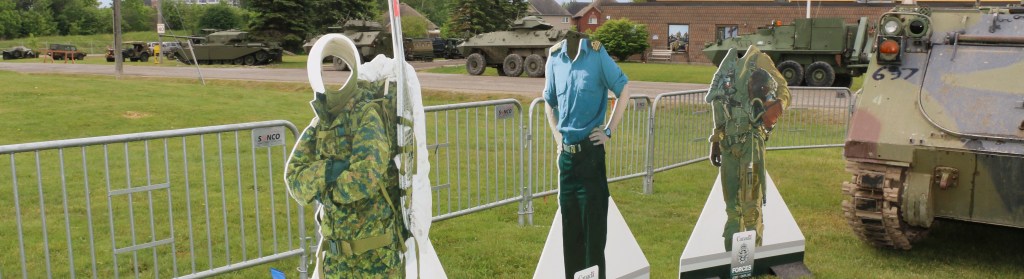
This new multi-year project investigates sites of material and narrative expressions of war remembrance across a range of contexts, including monuments, museums, historic sites, and spectacle events such as airshows and battle reenactments. Discursive and narrative practices in these places of public memory are analyzed as necessarily embodied in the sense that they are performed in encounters that entail the subjecthood of those enjoined to remember, including children. As subject-participants in the everyday of remembrance, children variously perceive, internalize, reproduce, engage, assess, interpret, assimilate, subvert, and resist the social scripts through which war narratives are made intelligible across multiple contexts. Developing the concept of ‘everyday pedagogies’ together with an emphasis on children’s subjecthood, the project approaches children as simultaneously subjects and recipient-objects of social knowledge.
Childing, Militarism, and the Governance of Armed Conflict

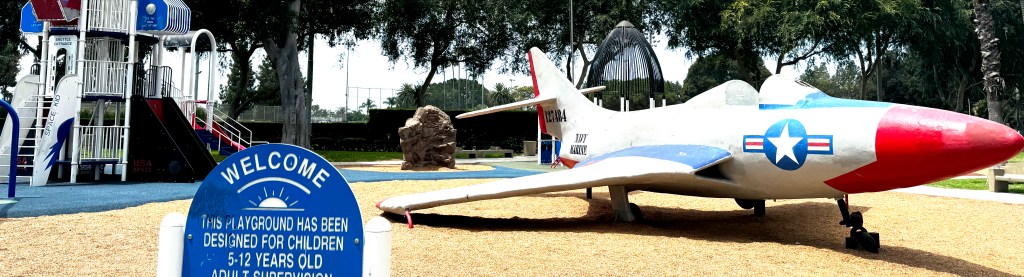
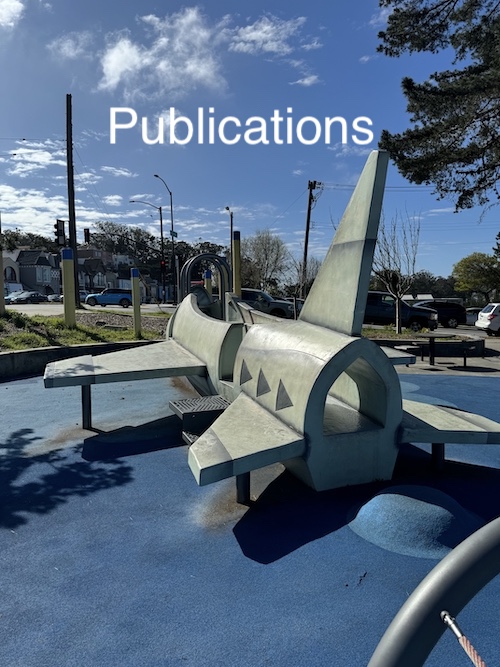
From warplanes as playground features to war museums hosting children’s birthday parties, this research project draws insights from children’s encounters with war narrative and the easy, often light-hearted coexistence of childhood and militarism across innumerable settings of everyday life. Its central premise is that simultaneous with the militarization of childhood is the childing of militarism. Deeply invested with social meaning, imagined childhood brings content and implications to encounters with militarism that go beyond inculcation of children, affecting how militarized practices are decoded more generally. Children’s presence in militarized spaces, in war remembrance, and more is, for other subjects as much as for children themselves, a constituent in making meaning of militarism as a benevolent force. This project brings a childhood-informed perspective to bear on the ways in which dominant ideas about childhood work to condition our understanding of militarism and war themselves.
Rights Education and the Children’s University
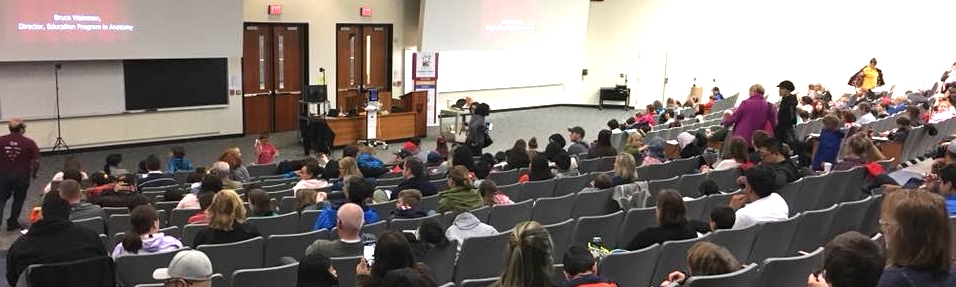
This project approaches children’s university programs as engaged forms of rights education allied with efforts toward democratic inclusion of children. To the extent that they produce opportunities for children to discover themselves as participants in knowledge production and transmission, children’s universities may promote children’s recognition of their own extant (not just deferred) potential to make a difference in their societies. Meaningful participation, in turn, underwrites possibilities both for children to be seen as and to come to see themselves as practicing a fuller citizenship as children – that is, premised on their present assets, capabilities, insights, and experiences and not just on preparation for eventual ‘ascension’ to adulthood. The participation rights laid out in the United Nations Convention on the Rights of the Child herald just this promise but, in practice, little progress has been made on their implementation in the more than three decades since the Convention came into force. Also largely unfulfilled is the UNCRC commitment for states to educate citizens (including but not limited to children) on the Convention and its provisions.
Selected Past Projects
Children, Rights, and Security: Global Performatives, Local Practices
SSHRC Insight Grant, $95,845 (2019-23)
Concluded in 1989, the United Nations Convention on the Rights of the Child (UNCRC) is the most widely endorsed human rights instrument in the world. In everyday practice, however, children’s rights are routinely ignored in myriad contexts. In Canada, a patchwork of different policies and practices has resulted in wide variation in the degree of implementation of the UNCRC from jurisdiction to jurisdiction. The same is true both between and within other countries the world over, with many of those in the privileged Global North underperforming significantly. Against this backdrop, there has as yet been little in the way of International Relations scholarship engaging children as rights holders. To what extent can we understand children as rights-bearing subjects as opposed to objects of protections conferred via the granting of rights by other subjects? Related to this, how may we navigate the tension between this and their relative powerlessness? These are questions not easily addressed from a standpoint in which children figure as objects of protection and political subjecthood remains very much the exclusive preserve of the adult world. This research project examines everyday institutions and practices affecting children’s rights and security in the Global North and the extent to which they have variously implemented, failed to implement, or may even impede UNCRC rights.
The Militarization of Childhood: Practices and Pedagogies
SSHRC Insight Grant, $94,391 (2014-18)
Allied with a much needed critical turn in the vast and still rapidly growing child soldier literature, this project asks whether there may be ways in which childhood is militarized beyond the Global South through enactments of militarism that have drawn much less in the way of critical inquiry. Uncovering and examining such enactments and exploring their relatively more subtle circulations in tension with the child soldier debates is a principal aim of the project, and one which brings into relief the under-interrogated and everyday ways in which children’s lives may be militarized in less scrutinized contexts and settings. At the same time, the project seeks to reveal complex workings of agency too often obscured by overly reductionist and ascriptive notions of victimization. Moving beyond a focus on zones of conflict, the project works to bring to view everyday pedagogies whereby myriad knowledges, performances, practices, and competencies may function to militarize children’s lives in advanced (post)industrial societies. Treating these circulations as pedagogies is not to suggest that there need necessarily be a conscious instrumentality giving rise to them. The project therefore takes important conceptual cues from actor-network theory and the notion of ‘heterogeneous assemblages,’ understanding that actors can be part of an assemblage without necessarily sharing the same aims. This underscores the indeterminacy of militarized knowledges and, at the same time, highlights childhood as a site of agency inasmuch as a sensitivity to everyday practice locates agency in learning.
Childhood, Militarism, and Pedagogies of the Everyday
McMaster University Arts Research Board Grant, $6,275 (2011)
Thinking beyond the Global South and recognizing that militarism circulates and interpenetrates childhood experience in ways that are much less conspicuous than child soldiering raises questions of critical relevance to but not yet taken up in the disciplinary study of international relations. What is the relationship between militarism and childhood in advanced (post)industrial societies and what can be learned about its sources and implications? To what extent is childhood important as a site for the translation, maintenance, and (re)production of militarized knowledges and practices? How do prevailing conceptualizations of victimization limit our understanding of children’s capacity for autonomous action, creativity, and resistance? In what ways are less visible circulations of militarism similar to and different from more explicit and purposefully-conceived forms? What can an approach that takes children seriously as bona fide politico-ethical actors reveal to us about the ways in which the disciplinary study of international relations frames political possibilities? In addressing these questions, this research project brings together a focus on everyday sites of both structured and unstructured learning with a commitment derived from postcolonial theory to recovering agency from overly simplistic ascriptions of victimhood. The project explores more explicitly militarized knowledges and practices in global politics while looking also to some of the less obvious continuities with these same knowledges and practices in various contexts of children’s active learning and leisure activities. This approach, together with themes of everyday pedagogy and childhood agency, proposes a corrective to too narrow a focus on zones of conflict that might make it seem as though militarism affects the lives of children only in distant and politically fraught places.
Postcolonial Diplomacies: Indigenous Peoples and the International Negotiation of Sovereignties and Selves
SSHRC Standard Research Grant, $71,733 (2005-08)
McMaster University Arts Research Board Grant, $4,550 (2004)

Since the early-1990s, Indigenous voices in international politics have been growing in strength, in numbers, and in their demonstrated ability to affect outcomes on a range of important issues. At the same time, international bodies like the Organization of American States have begun to take seriously the participation of Indigenous peoples and, equally noteworthy, the United Nations Permanent Forum on Indigenous Issues has enjoyed a steadily increasing profile since its formal adoption by the UN General Assembly in October 2000. With these and other developments, global politics is witnessing qualitatively new forms of diplomacy. In investigating these developments, this research project works through three interrelated themes. The first of these turns on questions of change, inquiring into how existing institutions, arrangements, norms, and practices of global governance are transformed by Indigenous diplomacies and, no less, how the latter have been affected by the need to work through the former. The second theme involves highlighting and clarifying continuities on both sides of the encounter, seeking to better appreciate and understand commonalities, compatibilities, and areas of convergence. Finally, points of divergence are examined with a view to revealing compromises around notions of sovereignties and selves that have enabled these diplomatic encounters and engagements.

© 2026 J. Marshall Beier
 J. Marshall Beier